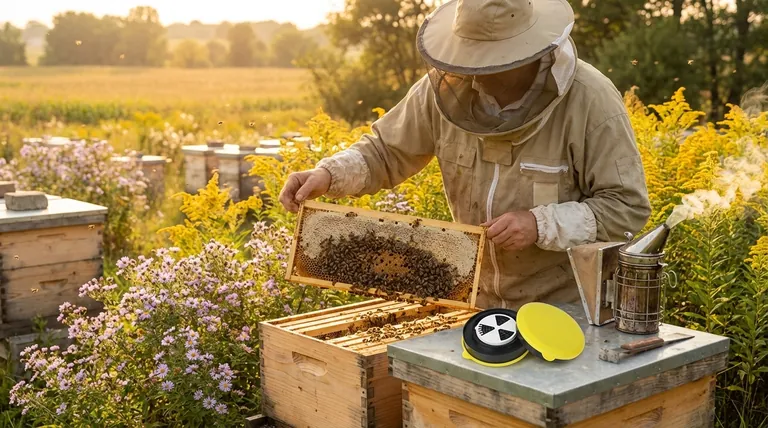
늦여름은 양봉가들에게 중요한 도전 과제를 안겨줍니다. 바로아 응애 개체 수가 급증하여 꿀 생산이 절정에 달하는 시기에 벌통의 건강을 위협하기 때문입니다. 효과적인 응애 억제와 꿀 품질 보존 사이의 균형을 맞추려면 전략적 모니터링, 선제적 개입, 그리고 지역 사회 전체의 협력이 필요합니다. 이 가이드는 방해 없는 관리 방식을 찾는 상업용 양봉장을 위한 실행 가능한 솔루션을 제공합니다.
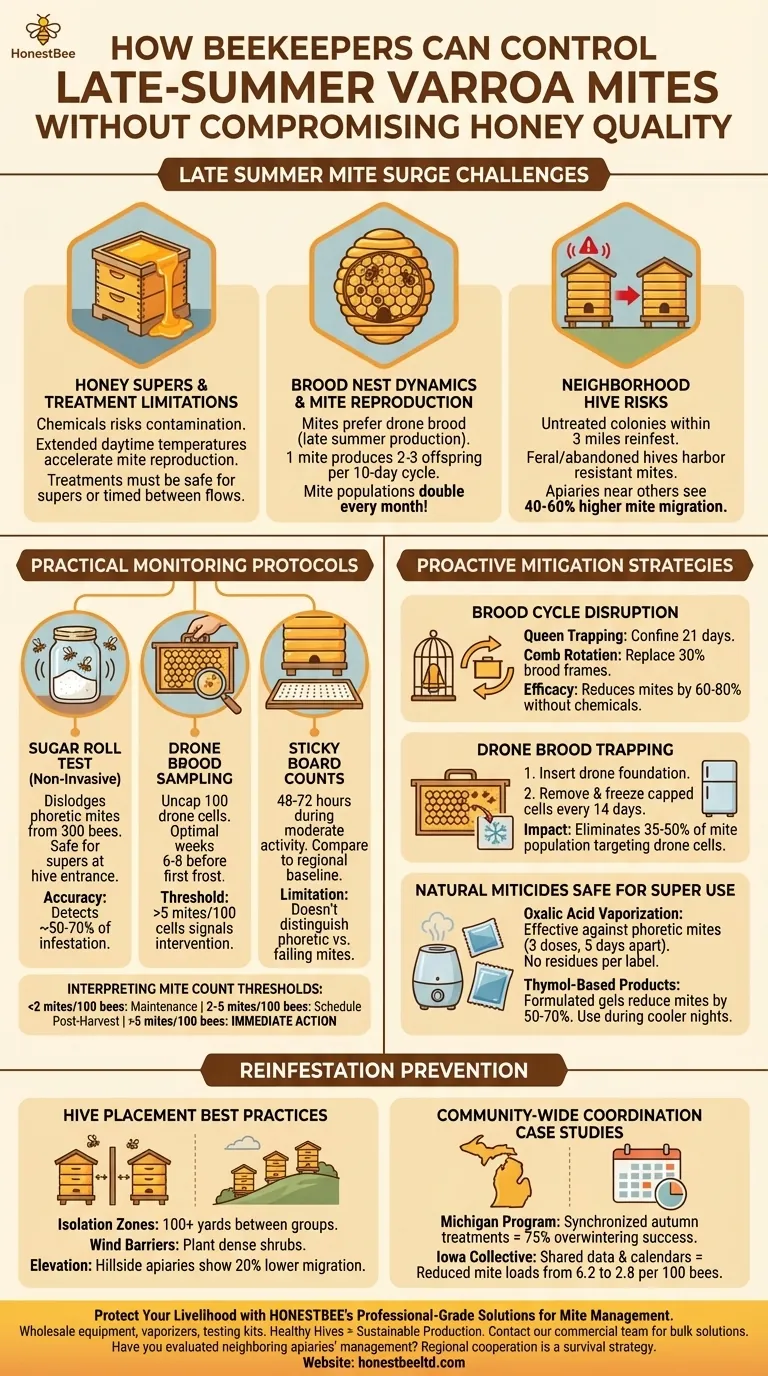
늦여름 응애 급증의 도전 과제
바로아 응애(Varroa destructor) 개체 수가 늦여름에 급증하는 데에는 세 가지 복합적인 요인이 있습니다:
꿀 계상(Honey Supers) 및 처리 제한
- 대부분의 화학적 응애 구제제는 오염 위험 때문에 채밀기 동안 사용할 수 없음
- 낮 기온이 길어지면 응애의 번식 주기가 가속화됨
- 주요 고려 사항: 처리는 계상에 안전해야 하며, 꿀 흐름(nectar flow) 사이의 시간을 잘 맞춰야 함
육아방 역학 및 응애 번식
- 응애는 늦여름에도 군집이 생산하는 수벌 봉개(drone brood)에 우선적으로 기생함
- 응애 한 마리는 10일간의 일벌 육아 주기마다 2~3마리의 자손을 번식시킬 수 있음
- 중요 시기: 응애 개체 수는 성수기 동안 매달 두 배로 증가함
주변 벌통의 위험
- 반경 3마일 이내의 미처리 군집은 재침입의 원인이 됨
- 야생 벌통과 방치된 장비는 종종 저항성 응애의 서식지가 됨
- 지역 데이터: 상업용 양봉장 근처의 양봉장은 응애 이동률이 40~60% 더 높음
실용적인 모니터링 프로토콜
채밀기 동안의 비침습적 샘플링 방법
-
슈가 롤 테스트(Sugar Roll Test)
- 분당을 사용하여 벌 300마리에서 부착된 응애를 떨어뜨림
- 벌통 입구에서 수행할 경우 계상에 안전함
- 정확도 참고: 실제 감염 수준의 약 50~70%를 감지함
-
수벌 봉개 샘플링
- 수벌 방 100개를 개봉하여 응애 번식 성공 여부 확인
- 첫 서리가 예상되기 6~8주 전이 최적기
- 임계값: 100개 방당 5마리 이상의 응애가 발견되면 즉각적인 개입 필요
-
끈끈이 판(Sticky Board) 계수
- 활동이 적당한 기간 동안 48~72시간 동안 판을 설치
- 낙하 수를 지역 기준 데이터와 비교
- 한계: 부착된 응애와 떨어진 응애를 구분하지 못함
응애 수 임계값 해석
- 100마리당 2마리 미만: 유지 관리 모니터링만 수행
- 100마리당 2~5마리: 채밀 후 처리 일정 수립
- 100마리당 5마리 초과: 즉각적인 육아방 타겟 조치 필요
선제적 완화 전략
육아 주기 중단 기술
- 여왕벌 가두기: 여왕벌을 21일간 1~2개의 소비에 가두어 육아 중단 기간을 만듦
- 소비 교체: 육아 소비의 30%를 교체하여 응애 번식 주기를 끊음
- 효능 데이터: 중단 방법은 화학 물질 없이 응애 부하를 60~80% 감소시킴
수벌 봉개 트랩의 효능
- 가장자리 소비에 수벌 소초를 삽입
- 14일마다 봉개된 방을 제거하고 냉동
- 영향: 수벌 방을 타겟으로 하는 응애 개체 수의 35~50%를 제거
계상 사용에 안전한 천연 응애 구제제
- 옥살산 훈증(Oxalic Acid Vaporization)
- 5일 간격으로 3회 투여 시 부착된 응애에 효과적
- 라벨 지침에 따라 사용 시 꿀에 잔류물을 남기지 않음
- 티몰(Thymol) 기반 제품
- 젤 형태의 제품은 소비 오염 없이 응애를 50~70% 감소시킴
- 사용 팁: 벌의 자극을 최소화하기 위해 서늘한 밤에 사용
재침입 방지
벌통 배치 모범 사례
- 격리 구역: 처리 그룹 간에 100야드(약 91m) 이상의 거리를 유지
- 방풍림: 빽빽한 관목을 심어 벌의 표류를 줄임
- 고도: 언덕에 위치한 양봉장은 응애 이동률이 20% 더 낮음
지역 사회 전체의 협력 사례 연구
- 미시간 양봉가 협회 프로그램
- 8개 카운티에 걸쳐 가을철 처리 동기화
- 비참여 지역의 45% 대비 75%의 월동 성공률 기록
- 아이오와 상업용 양봉가 연합
- 모니터링 데이터 및 처리 일정 공유
- 3시즌 만에 평균 응애 부하를 100마리당 6.2마리에서 2.8마리로 감소
HONESTBEE의 전문가용 솔루션으로 생계를 보호하세요
상업용 양봉가들은 규모에 맞는 응애 관리를 위해 HONESTBEE의 도매 중심 장비를 신뢰합니다. 훈증기부터 테스트 키트까지, 당사의 시스템은 유통업체가 연구 기반 도구로 양봉장을 갖출 수 있도록 돕습니다. 건강한 벌통은 지속 가능한 꿀 생산을 의미하기 때문입니다. 귀하의 운영 규모에 맞는 대량 솔루션은 당사 상업팀에 문의하십시오.
주변 양봉장의 관리 일정이 귀하의 응애 압력에 어떤 영향을 미치는지 평가해 보셨나요? 지역 협력은 단순히 이웃 간의 도리가 아니라, 현대 양봉에서 생존을 위한 전략입니다.
시각적 가이드
관련 제품
- 바로아 진드기 치료를 위한 내구성 있는 12V 옥살산 기화기 벌집 양봉 도구
- 바로아 이지 체크 진드기 테스터 키트 카운터 알코올 세척 용기
- 소형 원형 벌 진드기 치료 디스펜서
- 꿀벌 바로아 진드기 치료를 위한 옥살산 기화기 12V
- 꿀벌 진드기 치료를 위한 조절식 포름산 및 초산 디스펜서









