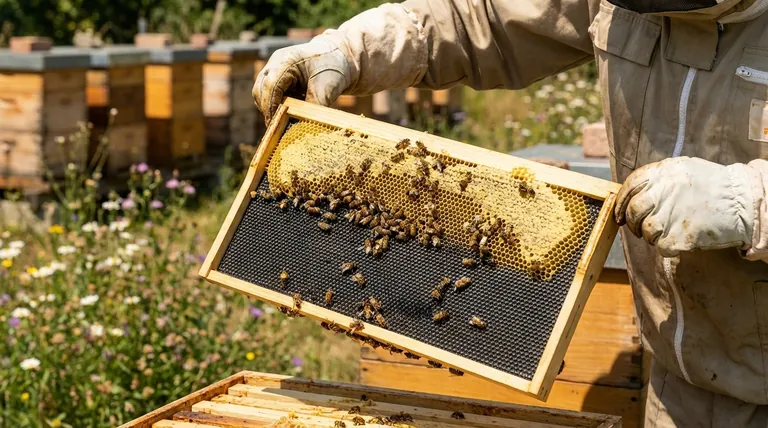
Modern beekeeping operations face a critical challenge: maximizing efficiency without compromising colony health. Plastic foundations have emerged as a game-changer for commercial apiaries, offering durability and cost savings—but only when implemented with careful attention to bee behavior. This guide reveals proven strategies to optimize plastic foundation use while maintaining hive productivity.
Why Plastic Foundations Dominate Commercial Beekeeping
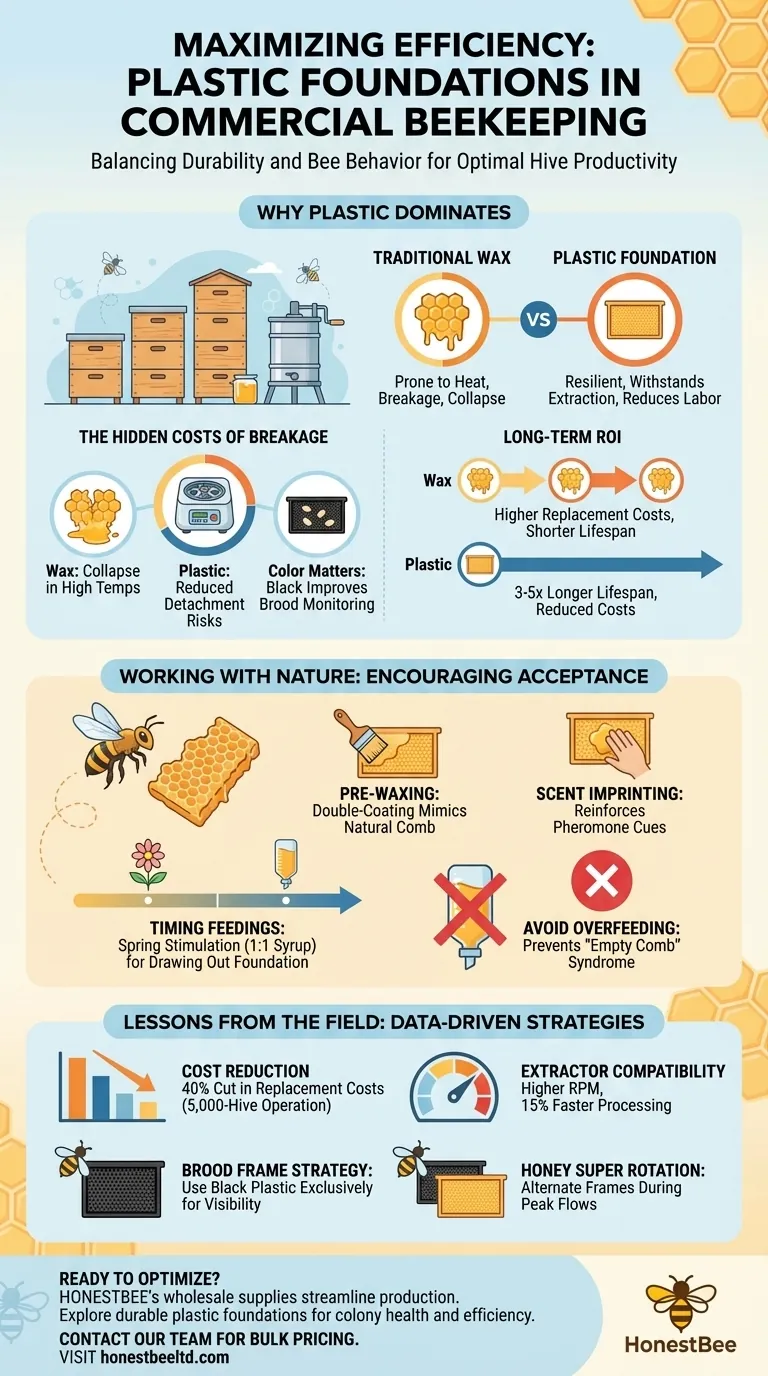
Plastic foundations are the backbone of large-scale beekeeping due to their resilience and operational advantages. Unlike traditional wax foundations, they withstand repeated honey extractions and reduce labor-intensive maintenance.
The Hidden Costs of Comb Breakage During Honey Extraction
- Wax vs. Plastic Durability: Wax combs are prone to collapse in high temperatures (e.g., summer heatwaves), while plastic foundations maintain structural integrity.
- Extraction Efficiency: Plastic reduces comb detachment risks during centrifugal extraction, a common issue for inexperienced beekeepers.
- Color Matters: Black plastic foundations improve brood monitoring by making eggs more visible—a key advantage for queen health assessments.
Long-Term ROI: Plastic vs. Wax Foundation Durability
Commercial apiaries report:
- Reduced Replacement Costs: Plastic lasts 3–5x longer than wax under typical extraction cycles.
- Warping Considerations: While plastic may bend slightly after extraction, strategic frame spacing minimizes operational delays.
Working with Nature: Encouraging Bees to Accept Plastic
Bees naturally prefer wax, but these methods bridge the gap:
Pre-Waxing Methods That Mimic Natural Comb
- Double-Coating: Applying an extra wax layer (beyond factory spraying) significantly improves comb acceptance rates.
- Scent Imprinting: Rubbing beeswax along cell edges reinforces natural pheromone cues.
Timing Feedings to Align with Honey Flow Cycles
- Spring Stimulation: Light syrup feeding (1:1 ratio) during early buildup phases encourages bees to draw out plastic foundations.
- Avoid Overfeeding: Excess syrup in non-flow seasons leads to "empty comb" syndrome—bees store syrup instead of building brood cells.
Lessons from the Field: Data-Driven Beekeeping Strategies
Top-performing apiaries share these insights:
How Commercial Apiaries Reduced Costs with Plastic Foundations
- Case Example: One 5,000-hive operation cut comb replacement costs by ~40% after switching to pre-waxed black plastic foundations.
- Extractor Compatibility: Plastic’s rigidity allows higher RPM extraction without comb blowouts, saving ~15% processing time per super.
Avoiding the “Empty Comb” Problem in Large-Scale Operations
- Brood Frame Strategy: Use black plastic foundations exclusively in brood boxes for better egg visibility.
- Honey Super Rotation: Alternate plastic and wax frames in honey supers during peak flows to maintain bee acceptance.
Ready to Optimize Your Apiary’s Efficiency?
HONESTBEE’s wholesale beekeeping supplies help commercial operations reduce costs and streamline honey production. Explore our durable plastic foundations—designed to withstand rigorous extraction while supporting colony health. [Contact our team] for bulk pricing tailored to your apiary’s scale.
Because in modern beekeeping, durability and bee behavior shouldn’t be a trade-off—they should work together.
Products You Might Be Looking For:
Explore food-grade plastic bee foundations
Shop wholesale beekeeping hive frames
시각적 가이드
관련 제품
- 식품 등급 꿀벌 프레임용 플라스틱 꿀벌 파운데이션
- 내구성과 편의성을 위한 플라스틱 기초가 있는 조립식 나무 벌 프레임, HONESTBEE
- 도매용 플라스틱 꿀벌 프레임 양봉 벌통 프레임
- 노트북 스타일 밀랍 파운데이션 몰드 왁스 파운데이션 몰드
- 양봉용 컬러풀 실리콘 밀랍 파운데이션 몰드 금형









