Beekeepers face mounting challenges—from colony collapse to unpredictable swarming—that threaten productivity. Nucleus colonies (nucs) offer a systematic solution, serving as living insurance policies for apiaries. This guide reveals how strategic nuc deployment strengthens genetic diversity, prevents losses, and cuts long-term costs compared to conventional package bees.
Nucleus Colonies as a Cornerstone of Sustainable Beekeeping
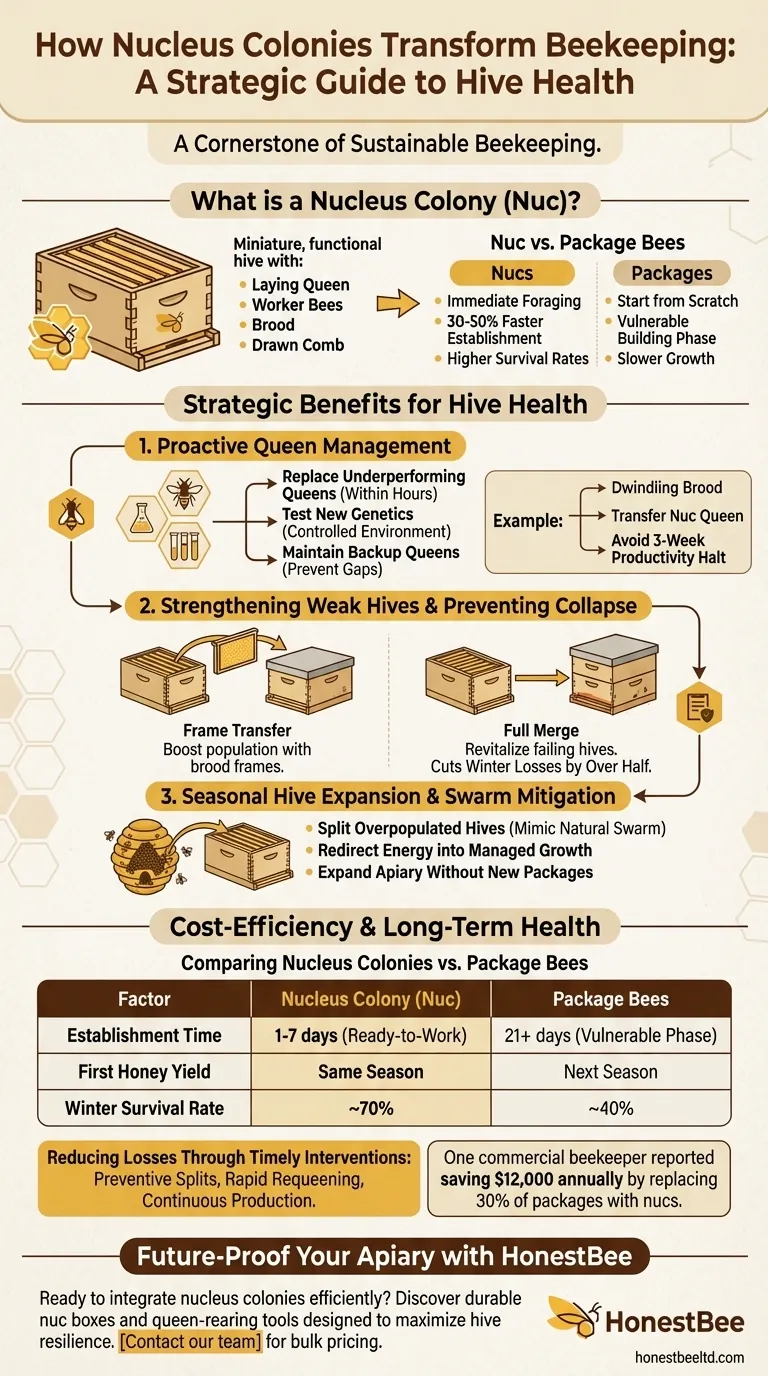
Nucleus colonies are miniature, fully functional hives containing a laying queen, worker bees, brood, and drawn comb. Unlike package bees that start from scratch, nucs provide immediate foraging capacity and established resources. Research shows this "ready-to-work" advantage translates to:
- 30-50% faster hive establishment compared to packages
- Higher survival rates due to pre-developed brood cycles
- Reduced stress on bees during integration
Proactive Queen Management and Genetic Diversity
Queen failure is a leading cause of hive collapse. Nucs allow beekeepers to:
- Replace underperforming queens without waiting for mail-order replacements
- Test new queen genetics in a controlled environment before introducing them to production hives
- Maintain backup queens to prevent gaps in egg-laying during critical seasons
Example: If a honey hive shows dwindling brood patterns, a beekeeper can transfer a nuc’s queen within hours—avoiding the 3-week productivity halt typical of queenless hives.
Strengthening Weak Hives and Preventing Colony Collapse
Nucs act as emergency reinforcements for struggling colonies. Two proven methods:
- Frame Transfer: Move brood frames from nucs to weak hives to boost population
- Full Merge: Combine a nuc with a failing hive, leveraging the nuc’s healthier bees to revitalize the group
This intervention cuts winter losses by over half, according to apiary field reports.
Seasonal Hive Expansion and Swarm Mitigation
Nucs help manage natural swarming impulses—a major productivity disruptor. Before peak swarming season:
- Split overpopulated hives into nucs to mimic a natural swarm
- Redirect bees’ energy into managed growth rather than uncontrolled swarming
- Expand apiary capacity without purchasing new packages
Cost-Efficiency and Long-Term Hive Health
While nucs require upfront investment, they reduce recurring expenses.
Comparing Nucleus Colonies vs. Package Bees
| Factor | Nucleus Colony | Package Bees |
|---|---|---|
| Establishment Time | 1-7 days | 21+ days |
| First Honey Yield | Same season | Next season |
| Winter Survival Rate | ~70% | ~40% |
Nucs eliminate the "colony building phase" where package bees are most vulnerable to pests and starvation.
Reducing Losses Through Timely Interventions
The flexibility of nucs enables:
- Preventive splits before diseases spread
- Rapid requeening during mite treatment cycles
- Continuous production by rotating nucs into production hives
One commercial beekeeper reported saving $12,000 annually by replacing 30% of packages with nucs.
Ready to future-proof your apiary? HONESTBEE’s wholesale beekeeping supplies help commercial operations integrate nucleus colonies efficiently—from durable nuc boxes to queen-rearing tools. Discover equipment designed to maximize your hives’ resilience. [Contact our team] for bulk pricing tailored to your scale.
Key Takeaway: Nucleus colonies aren’t just queen backups—they’re a scalable system for sustainable apiary management. By treating nucs as strategic assets, beekeepers gain control over variables that dictate long-term success.
시각적 가이드
관련 제품
- 양봉용 5 프레임 나무 넉 박스
- 5 프레임 랑스트로스 폴리 넉 골판지 플라스틱 넉 박스
- 목표 군집 영양 공급을 위한 인-하이브 이중 칸막이 프레임 꿀벌 피더
- 꿀벌 여왕 교미용 자동 보온 6 프레임 프로 누크 박스