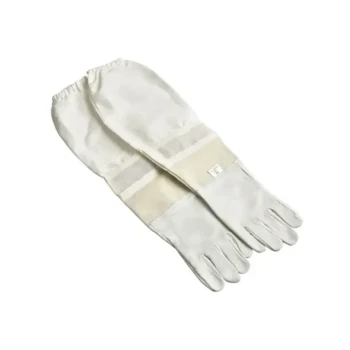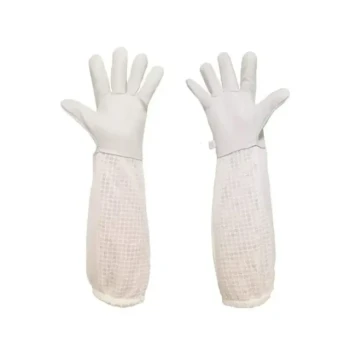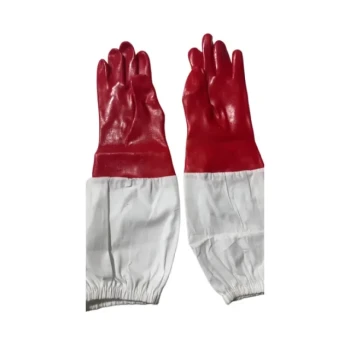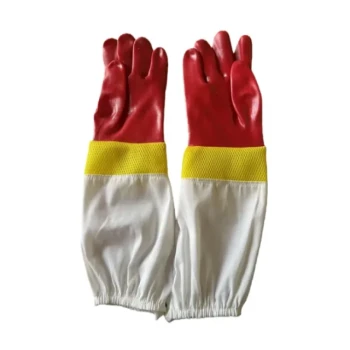
Beekeeping leather gloves are your first line of defense against stings, but improper care can compromise their protective qualities. This guide reveals a holistic preservation system—combining pH-balanced cleaning, fiber-conscious brushing, and storage science—to prevent material degradation while maintaining sting resistance.
Preserving Protective Integrity in Apiary Workwear
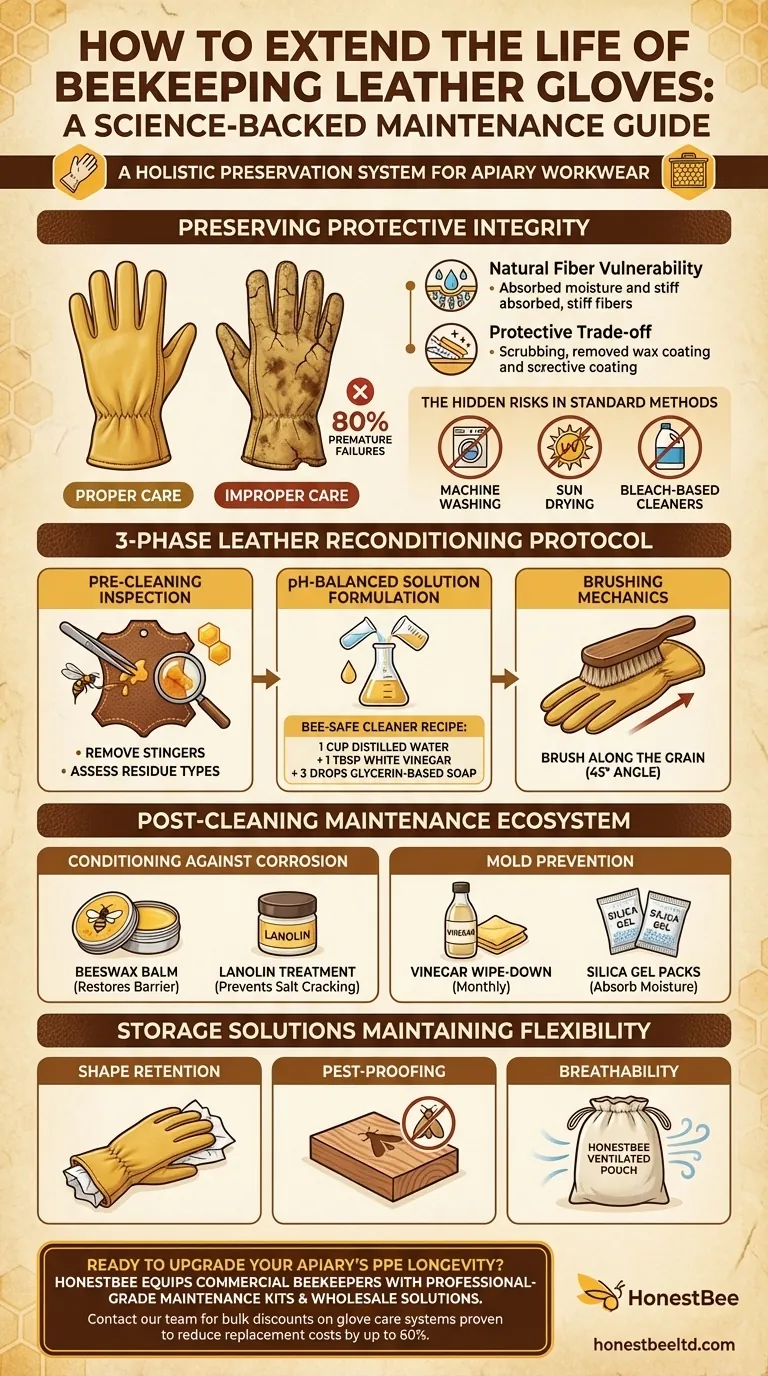
Leather gloves degrade faster than synthetic alternatives when exposed to honey, propolis, and sweat. Research shows that 80% of premature glove failures stem from incorrect cleaning or storage.
Why Leather Requires Specialized Care
-
Natural fiber vulnerability: Unlike synthetic materials, leather absorbs bee secretions and moisture, leading to:
- Fiber stiffening (reducing dexterity)
- pH imbalance (accelerating corrosion from acidic honey residues)
- Protective trade-off: Harsh scrubbing removes sting-resistant wax coatings, while inadequate cleaning lets residues eat into the material.
The Hidden Risks in Standard Cleaning Methods
Common mistakes beekeepers make:
- Machine washing: Agitation weakens leather fibers (even in "gentle" cycles).
- Sun drying: UV rays cause brittleness—hang drying in shade preserves flexibility.
- Bleach-based cleaners: Destroy natural oils, creating cracks where stingers penetrate.
Step-by-Step Leather Reconditioning Protocol
Follow this 3-phase process after each apiary session to maintain glove integrity.
Pre-Cleaning Inspection Techniques
- Check for stingers: Remove embedded barbs with tweezers to prevent venom-induced leather decay.
-
Assess residue types:
- Honey/propolis: Sticky, amber-colored patches (require enzymatic cleaners).
- Wax: Whitish, waxy deposits (needs warm-water softening).
pH-Balanced Solution Formulation
Create a bee-safe cleaner (avoids 9+ pH detergents that degrade leather):
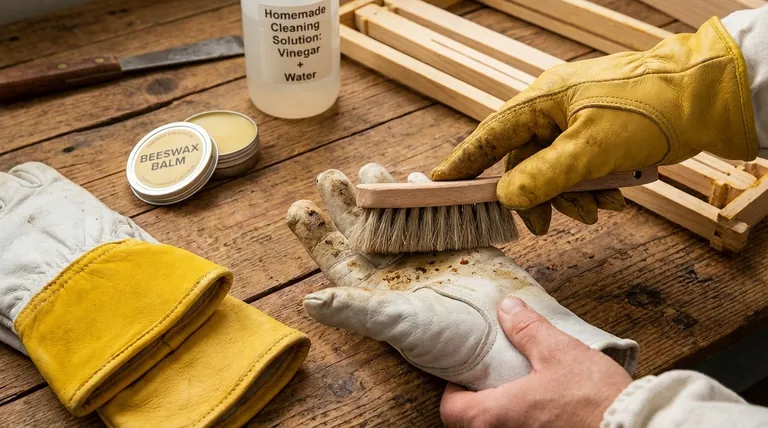
- 1 cup distilled water (prevents mineral buildup)
- 1 tbsp white vinegar (neutralizes alkaline residues)
- 3 drops glycerin-based soap (preserves natural oils)
Brushing Mechanics for Fiber Preservation
- Direction matters: Brush along the grain (not circular motions) to prevent fiber separation.
- Tool selection: Use a horsehair brush (softer than nylon) at 45° angles to lift debris gently.
Post-Cleaning Maintenance Ecosystem
Conditioning Against Honey Residue Corrosion
- Beeswax balm: Restores water-repellent barriers. Rub into damp gloves post-cleaning.
- Lanolin treatment: For gloves in humid climates, prevents salt-induced cracking from sweat.
Mold Prevention in Humid Environments
- Vinegar wipe-down: Monthly treatment with diluted vinegar (1:5 ratio) inhibits fungal growth.
- Silica gel packs: Place in storage containers to absorb residual moisture.
Storage Solutions Maintaining Flexibility
- Shape retention: Stuff fingers with acid-free tissue to prevent creasing.
- Pest-proofing: Cedar blocks repel moths and mice without chemical treatments.
- Breathability: Cotton storage bags (like HONESTBEE’s ventilated glove pouches) prevent mildew.
Ready to upgrade your apiary’s PPE longevity? HONESTBEE equips commercial beekeepers with professional-grade maintenance kits, including pH-balanced cleaners and conditioning balms—wholesale solutions designed for high-volume operations. [Contact our team] for bulk discounts on glove care systems proven to reduce replacement costs by up to 60%.
Protect your investment—and your hands—with science-backed glove stewardship.
시각적 가이드
관련 제품
- 양봉 장갑 염소 가죽 긴 면 소매
- 통기성 긴 소매 염소 가죽 양봉 장갑, 꿀벌 침 방지 보호
- 캔버스 소매가 있는 염소 가죽 벌침 방지 양봉 장갑
- 통기성 프리미엄 염소 가죽 양봉 장갑 (3중 메쉬 소매 전체)
- 양봉가를 위한 연장된 순면 소매가 달린 헤비 듀티 레드 고무 양봉 장갑