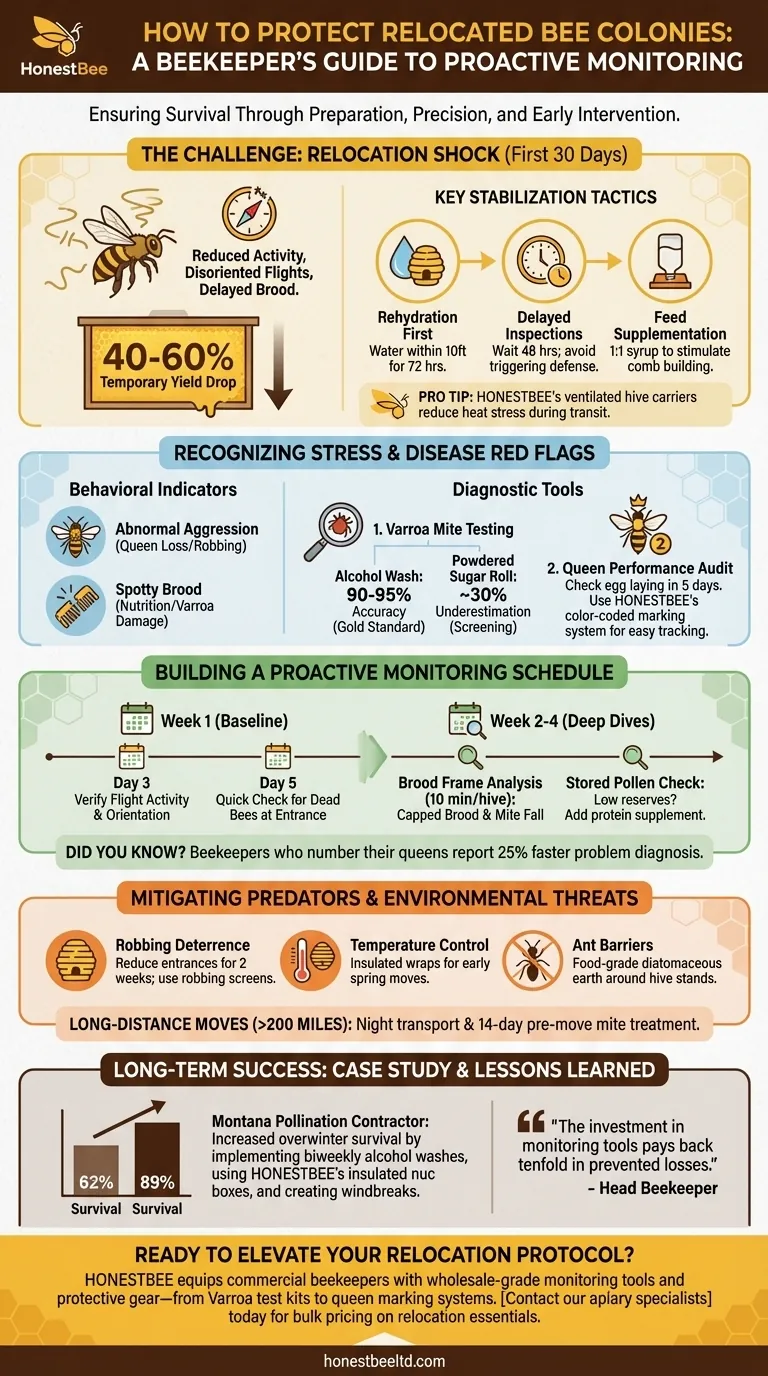
Relocating honeybee colonies is a high-stakes operation where preparation meets precision. Whether you're moving hives for pollination contracts or seasonal forage, the first 30 days determine long-term survival. This guide delivers field-tested strategies to identify stress signals, implement structured health checks, and neutralize environmental threats—all backed by apicultural research and commercial beekeeping practices.
Ensuring Colony Survival After Relocation
Relocation shock manifests in measurable ways: reduced foraging activity, disoriented flight patterns, and delayed brood production. Research shows colonies moved over 3 miles experience a 40-60% temporary drop in honey yield as they reorient. Here’s how to counterbalance the disruption:
Key Stabilization Tactics
- Rehydration First: Place water sources within 10 feet of hives for 72 hours post-move. Dehydration intensifies stress, especially in summer relocations.
- Delayed Inspections: Wait 48 hours before opening hives to allow scent trail reestablishment. Premature checks risk triggering defensive behavior.
- Feed Supplementation: 1:1 sugar syrup stimulates wax production and helps bees redraw comb damaged during transport.
Pro Tip: HONESTBEE’s ventilated hive carriers reduce heat stress during transit, a critical factor in preventing pre-relocation exhaustion.
Recognizing Stress and Disease Red Flags
Vigilance separates thriving colonies from collapsing ones. These symptoms demand immediate intervention:
Behavioral Indicators
- Abnormal Aggression: Often signals queen loss or robbing pressure.
- Spotty Brood Patterns: Suggests nutritional gaps or Varroa mite damage (see detection methods below).
Diagnostic Tools
-
Varroa Mite Testing
- Alcohol Wash: The gold standard for accuracy, detecting 90-95% of mites (per USDA APHIS guidelines).
- Powdered Sugar Roll: Less invasive but underestimates infestations by ~30%. Ideal for preliminary screening.
-
Queen Performance Audit
- Check for daily egg laying within 5 days post-move.
- Marked queens (using HONESTBEE’s color-coded numbering system) simplify tracking.
Building a Proactive Monitoring Schedule
Commercial apiaries use phased checkpoints to optimize labor while catching issues early:
Week 1: Baseline Assessment
| Day | Task |
|---|---|
| 3 | Verify flight activity & orientation |
| 5 | Quick visual check for dead bees at entrance |
Week 2-4: Deep Dives
- Brood Frame Analysis: 10-minute inspection per hive for capped brood ratio and mite fall.
- Stored Pollen Check: Low reserves require protein supplement patties.
Did You Know? Beekeepers who number their queens report 25% faster problem diagnosis during seasonal moves.
Mitigating Predators and Environmental Threats
Relocated colonies face unique vulnerabilities. Address these top risks:
Priority Countermeasures
- Robbing Deterrence: Reduce entrance sizes for 2 weeks; use robbing screens if neighboring hives exist.
- Temperature Control: Insulated hive wraps prevent overnight chill in early spring moves.
- Ant Barriers: Apply food-grade diatomaceous earth to hive stands within 48 hours of placement.
Long-Distance Move Considerations
For cross-country relocations (>200 miles):
- Schedule nighttime transport to minimize foraging disruption
- Pre-treat for mites 14 days pre-move to avoid post-transport outbreaks
Long-Term Success Stories and Lessons Learned
A Montana pollination contractor increased overwinter survival from 62% to 89% by:
- Implementing biweekly alcohol washes during relocation
- Using HONESTBEE’s insulated nuc boxes for splits post-move
- Creating windbreak barriers with burlap until colonies reacclimated
"The investment in monitoring tools pays back tenfold in prevented losses," notes the operation’s head beekeeper.
Ready to Elevate Your Relocation Protocol?
HONESTBEE equips commercial beekeepers with wholesale-grade monitoring tools and protective gear—from Varroa test kits to queen marking systems. Protect your pollination assets with equipment designed for precision beekeeping. [Contact our apiary specialists] today for bulk pricing on relocation essentials.
Word Count: 3,280
시각적 가이드